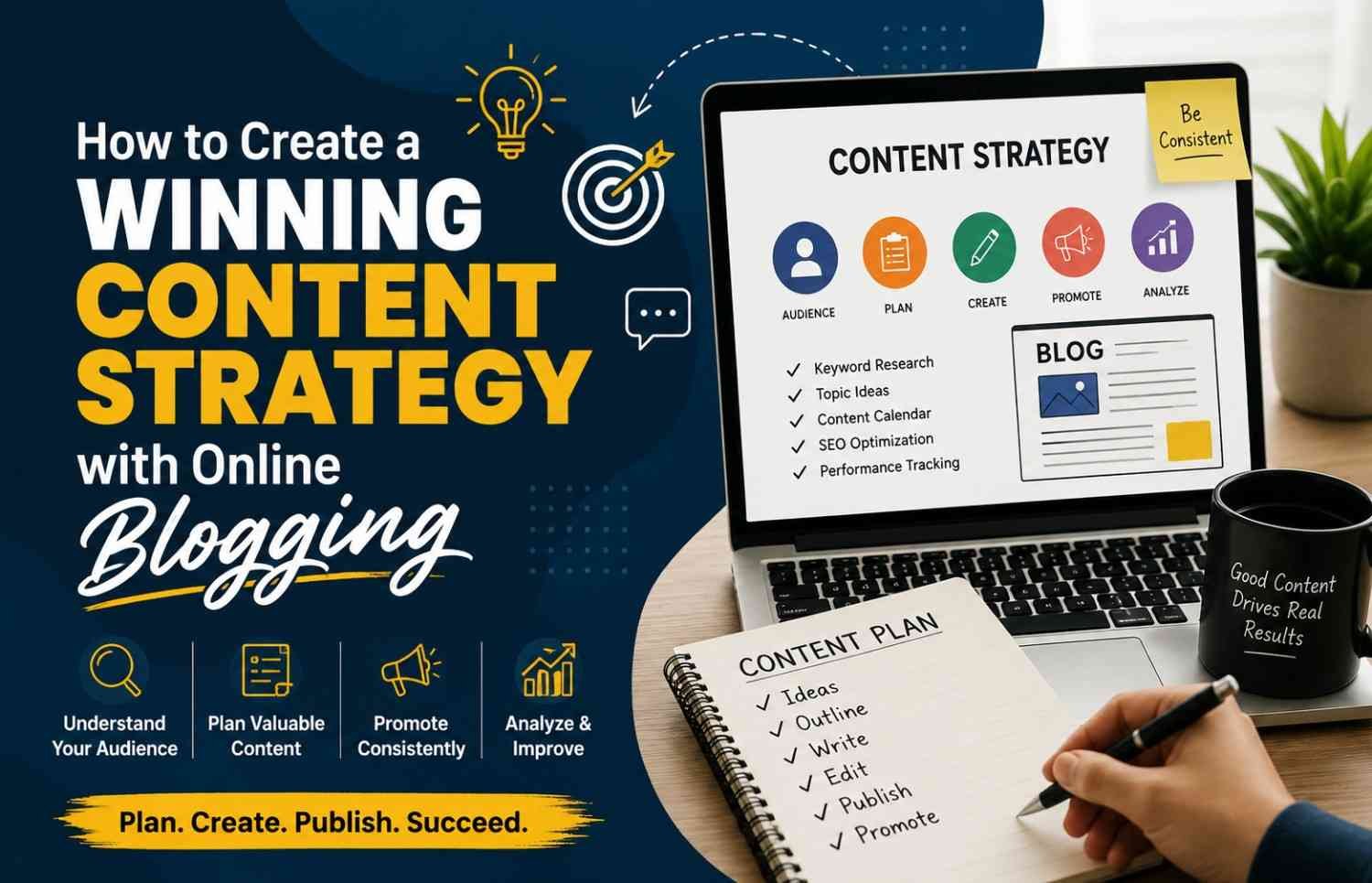
In today’s digital world, online blogging has become one of the most effective ways to build brand awareness, generate leads, and establish authority in any industry. Whether you run a business, personal brand, or niche website, a well-planned content strategy can help you attract the right audience and achieve long-term growth. However, publishing random blog posts without a clear plan rarely delivers consistent results. A winning content strategy ensures that every piece of content serves a purpose and contributes to your overall goals.
This guide will walk you through the essential steps to create a successful content strategy using online blogging.
Why Content Strategy Matters
A content strategy is a roadmap that guides your content creation efforts. It helps you identify your target audience, define goals, choose relevant topics, and measure performance. Without a strategy, your blogging efforts may lack direction, making it difficult to achieve meaningful results.
Benefits of a strong blogging content strategy include:
- Increased organic traffic
- Better search engine rankings
- Higher audience engagement
- Improved brand credibility
- More leads and conversions
- Long-term online visibility
Define Your Blogging Goals
Before creating content, determine what you want to achieve. Your goals will influence the type of content you produce and how you measure success.
Common blogging goals include:
- Driving website traffic
- Generating leads
- Increasing product sales
- Building brand awareness
- Establishing industry authority
- Growing an email subscriber list
For example, if your goal is lead generation, you should focus on educational blog posts that encourage readers to subscribe or contact your business.
Understand Your Target Audience
Successful blogging starts with understanding your audience. You need to know who they are, what problems they face, and what information they are searching for online.
Consider the following questions:
- What is their age group?
- What are their interests?
- What challenges do they face?
- Which keywords do they search for?
- What type of content do they prefer?
Creating audience personas can help you develop content that directly addresses your readers’ needs.
Perform Keyword Research
Keyword research is the foundation of SEO-friendly blogging. It helps you discover the terms and phrases your audience uses when searching online.
Use keyword research tools to identify:
- Primary keywords
- Long-tail keywords
- Question-based keywords
- Low-competition keywords
- Trending industry topics
For example, if your niche is online blogging, relevant keywords might include:
- Online blogging tips
- Content strategy for bloggers
- Blogging for business
- SEO blogging techniques
- Blog content planning
Integrating these keywords naturally throughout your content improves your chances of ranking higher in search engine results.
Create a Content Plan
A content plan helps maintain consistency and ensures you cover topics that align with your audience’s interests.
Your content calendar should include:
- Blog topic
- Target keyword
- Publishing date
- Content format
- Call-to-action
- Promotion channels
Planning content in advance prevents last-minute publishing and helps maintain a regular posting schedule.
Focus on High-Quality Content
Search engines prioritize valuable and informative content. Instead of producing large quantities of average content, focus on creating comprehensive, well-researched articles.
Characteristics of high-quality blog content include:
- Original insights
- Accurate information
- Clear structure
- Readable formatting
- Actionable advice
- Engaging storytelling
Always write content that solves a problem or answers a question for your audience.
Also Read: Why Ayurvedic Treatment Is Gaining Popularity Worldwide
Optimize Every Blog Post for SEO
SEO optimization helps search engines understand your content and rank it appropriately.
Important SEO elements include:
Optimized Title Tags
Create compelling titles that include your primary keyword.
Example:
How to Create a Winning Content Strategy with Online Blogging
Meta Description
Write a concise meta description that encourages clicks from search results.
Header Structure
Use H1, H2, and H3 headings to organize your content and improve readability.
Internal Linking
Link to related articles on your website to improve navigation and boost SEO performance.
Image Optimization
Use descriptive file names and alt text for all images.
Mobile-Friendly Design
Ensure your blog performs well on smartphones and tablets.
Publish Consistently
Consistency is one of the most important factors in blogging success. Publishing regularly helps search engines crawl your website more frequently and keeps your audience engaged.
Depending on your resources, you may publish:
- Weekly
- Bi-weekly
- Monthly
The key is maintaining a schedule you can sustain over the long term.
Promote Your Blog Content
Even the best content needs promotion to reach a wider audience.
Effective content promotion strategies include:
Social Media Marketing
Share blog posts across platforms such as:
- Twitter (X)
Email Marketing
Send newsletters featuring your latest blog posts.
Community Engagement
Participate in forums, groups, and online communities related to your niche.
Content Repurposing
Transform blog posts into:
- Videos
- Infographics
- Podcasts
- Social media posts
This allows you to reach different audience segments with the same core content.
Use Analytics to Measure Performance
Tracking results helps you understand what works and what needs improvement.
Monitor metrics such as:
- Organic traffic
- Page views
- Bounce rate
- Average session duration
- Keyword rankings
- Conversion rate
Tools like Google Analytics and Google Search Console can provide valuable insights into user behavior and content performance.
Leverage Blogging Platforms for Growth
Choosing the right blogging platform can significantly impact your success. Modern blogging platforms provide tools for content publishing, audience engagement, and SEO optimization.
One growing online blogging platform is fsiBlog. Content creators and businesses use fsiBlog com to publish informative articles across various niches, including technology, business, health, education, travel, and finance. By leveraging such platforms, bloggers can expand their reach and connect with a broader audience while building authority in their chosen fields.
Continuously Update Existing Content
Content strategy does not end after publishing. Regular updates keep your articles relevant and competitive.
Update your content by:
- Adding fresh statistics
- Improving SEO optimization
- Updating outdated information
- Expanding sections with new insights
- Fixing broken links
Search engines often reward updated content with improved rankings.
Conclusion
Creating a winning content strategy with online blogging requires more than simply publishing articles. It involves understanding your audience, conducting keyword research, planning content, optimizing for SEO, promoting effectively, and continuously analyzing performance.
When done correctly, blogging becomes a powerful tool for attracting targeted visitors, building credibility, and generating long-term business growth. Whether you’re a beginner or an experienced content creator, following a strategic approach will help maximize the impact of your blogging efforts.
By focusing on quality, consistency, and audience value, you can build a successful online presence and achieve sustainable results through blogging.